



Shanklin Hotel Plan Approved As Freshwater Scheme Rejected With St Helens Homes Backed

Three major and often controversial planning decisions have been made on the Isle of Wight, including a seafront hotel conversion in Shanklin, new homes in St Helens, and a large mixed-use scheme in Freshwater.
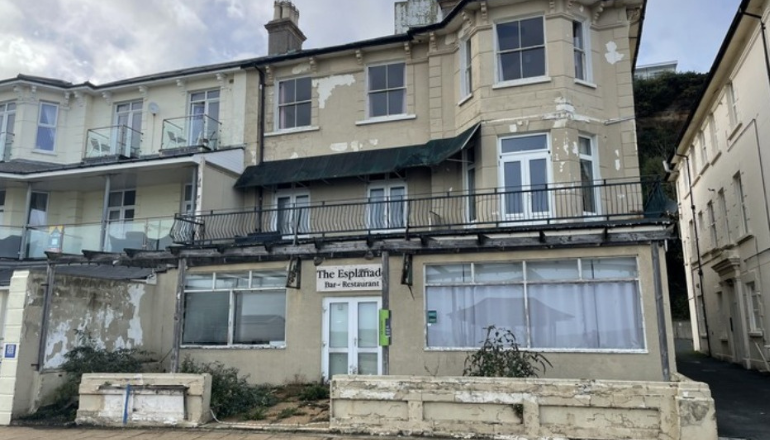
County Hall has given conditional approval for plans to convert the Esplanade Hotel on Shanklin seafront into six two-bedroom flats.
The building, described as being in a “very poor state of repair”, had been on the market for nearly three years. Supporters of the scheme argued it was no longer viable as tourist accommodation and risked further deterioration if left unused.
However, the plans attracted objections, with concerns raised about the loss of visitor accommodation, the potential impact on tourism, and fears it could set a precedent for other seafront hotels.
Some also argued the new flats would likely be unaffordable for many Islanders.
A formal decision report on the application is yet to be published.
Meanwhile, councillors have also approved plans for five “high quality” homes on land next to the former Station House on Station Road in St Helens.
The development includes an access road, garages, parking and landscaping.
More than 20 objections were submitted, with residents raising concerns about the impact on the character of the area, overlooking and loss of privacy, as well as building on a greenfield site.
Planning officers said the principle of housing on the site is supported by local policy, adding the scheme would provide an appropriate and spacious layout.
In contrast, a larger and more contentious proposal in Freshwater has been refused.
Plans for a mixed-use development at Heathfield Campsite, near Colwell Road, included new homes, a discount supermarket and associated infrastructure.
The scheme attracted significant opposition, with 154 objections lodged during consultation.
Concerns included drainage issues, increased traffic and congestion, pressure on local services, pedestrian safety, and the impact on wildlife and the surrounding area.
The council ultimately concluded that while there could be social benefits, these would be outweighed by the potential harm to protected species and designated sites.
All three decisions highlight the ongoing tensions between development, environmental concerns and the need for housing on the Isle of Wight.


Comments