



No Writer
Apr 17
XL bully owner Sean Garner sentenced to 12 years after dog mauled Warrington pensioner to death
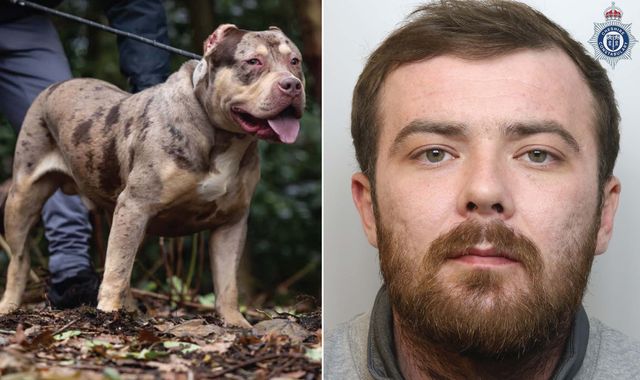
Sean Garner, 31, had denied the charge of owning a dog which caused injury while dangerously out of control, but was convicted following a trial at Liverpool Crown Court. He had previously admitted to possessing the banned male dog and a female of the same breed without an exemption certificate. John McColl died from his injuries a month after the attack by the dog in Warrington, Cheshire, on 24 February last year. The XL bully, called Toretto, mauled the pensioner after he wandered on to the driveway of Garner's home in Bardsley Avenue, the jury was told. During the trial, the court heard the dog had "savaged" Mr McColl and "guarded him as if he were its prey". Mr McColl suffered "catastrophic facial injuries" in the 45-minute attack, Liverpool Crown Court heard at the sentencing on Friday. The animal had to be shot 10 times by police who were called to the scene. A second XL bully, a female called Malibu, was shot when officers found her inside the house. Addressing Garner in court, Mr McColl's granddaughter Kelly Percival, 33, said: "Your dog basically ate my grandad, but you and your family don't care." Jailing Garner, Judge Brian Cummings KC said: "The suffering experienced by Mr McColl was quite unspeakable and really does not bear dwelling on." He said the retired steel erector, who remained conscious throughout the attack, must have been in "absolute agony". "We're still living a nightmare. This is something we'll never get over. It'll always be in the back of your head," Mr McColl's daughter, Joanne Percival, previously told Sky News' chief North of England correspondent Greg Milam. Garner claimed during the trial he had taken steps to prevent the dogs from being dangerously out of control, but the prosecution said the dog had been left on a patio area, which was only secured by a gate with a latch. Garner had accused Mr McColl of releasing the XL bully from a padlocked shed, claims which prosecutor David Birrell said were "ludicrous" and "absurd". Mr Birrell described Garner as a "selfish, reckless risk-taker" who told "bare-faced lies". "He has no empathy, not even an apology, he's only felt sorry for himself," Joanne Percival said, with her daughter Kelly adding that Garner "has shown no remorse in court". Mr McColl's daughter said there would be thousands of XL bully owners across the country who will likely think their dog wouldn't attack someone, adding that "they are probably right". Read more from Sky News:Former BBC DJ and Live Aid presenter has diedWhy are there two different state pensions? "They probably wouldn't, because they are probably loved. They walk the dogs, look after the dogs, and that's how you should [keep a dog]," Joanne Percival said. "He did not look after that dog, and that dog was put outside. That dog escaped. Sean Garner knows the truth and he will live with that for the rest of his life because he knows what happened." Garner admitted during the trial that he had not walked the two dogs for about 10 days, but said he had allowed them on to the patio for exercise. Lloyd Morgan, defending, said: "Sean Garner does express his deepest sympathy to the family of Mr McColl for the loss, and the manner of the loss, of their beloved family member."

No Writer
Apr 17
Tesco swapping barcodes for QR codes in UK 'first' - here's why
Scanning the QR codes with a smartphone will give shoppers access to information about the products, such as nutritional content and traceability. It could also allow access to recipes and competitions. The new codes will be applied to packaging of the supermarket's own-label sausages, including Tesco Pork Sausages, Tesco Pork Chipolatas and Tesco British Pork Sausage Meat. Money blog - follow the latest The change also applies to Tesco's British Cumberland Sausages and British Lincolnshire Sausages. Tesco called it "one of the most revolutionary retailing improvements in decades", saying it will help to improve stock control and reduce waste. The update is part of a wider industry transformation by GS1, the global standards body for barcodes, which is aiming for a "comprehensive rollout" of QR codes by 2027. QR codes will enable shops to identify specific batches in the event of product recalls, instead of products being thrown away unnecessarily. Retailers will be able to use them to block the sale of certain batches at checkout and contact customers who might have purchased them. Tesco's development and change director, Peter Draper, said: "For customers, this is a tiny and almost invisible change at the checkout, but for the retail industry, it's a significant step forward. "Over time, this opens up exciting possibilities, such as personalised digital tools to help customers manage the food they buy and reduce waste at home." Read more from Sky News:Three charged over London arson attackTributes after Arsenal goalie's shock death GS1 UK's chief executive Anne Godfrey said the move was a "significant step forward for UK retail". "It shows how the next generation of barcodes can support a more connected, transparent future," she said. "We hope this progress encourages others to follow Tesco's lead so that consumers and businesses alike can benefit from richer, more trusted product information."
No Writer
Apr 17
Neukgu the missing wolf is found safe and well after becoming internet sensation
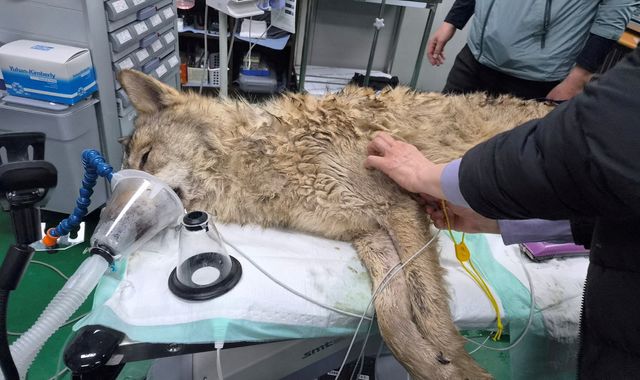
The two-year-old male wolf, named Neukgu, burrowed out of his enclosure at the O-World Zoo in Daejeon on 8 April, prompting a search. Animal rights groups feared that the animal would not survive in the wild, or could even be killed during his caputre - as was the fate of a puma that escaped from the zoo in 2018. But on Friday the search came to a happy end after Neukgu was found on a hill near a motorway, 4km (2.5 miles) away. He was safely tranquilised and taken to vets, who discovered a fishing hook in his stomach, which was safely removed. More than 100 people, including police officers and military troops - along with a host of drones - were deployed to find Neukgu. Many fans took to social media to welcome back the wolf. One said: "Neukgu, it's dangerous outside the house." In a Facebook post, Daejeon mayor Lee Jang-woo expressed his "deepest gratitude to citizens of Daejeon and also the entire nation for your support in ensuring Neukgu's safe return." Born at the zoo in 2024, Neukgu is a third-generation descendent of a group of wolves brought from Russia in 2008. He was part of a plan to reintroduce wolves resembling those that lived in the Korean wild before going extinct in the 1960s. Lee Kwan Jong, director of O-World, said Neukgu will be kept in a separate area from other animals and receive care until he has fully recovered and stabilized. Read more from Sky News:Israel accused of 'violating' Lebanon ceasefire dealMandelson appointment is a 'failing of the state', minister says The zoo's management, which has been criticised over a series of animal escapes, closed the zoo following Neukgu's escape, and said it had not decided when it would reopen. Zoo director Lee Kwan Jong said the zoo, which is reviewing its security measures, will prioritise the animal's recovery.
Stuart Ramsay, chief correspondent
Apr 17
Cuba is on its knees - and 'next' on Trump's list
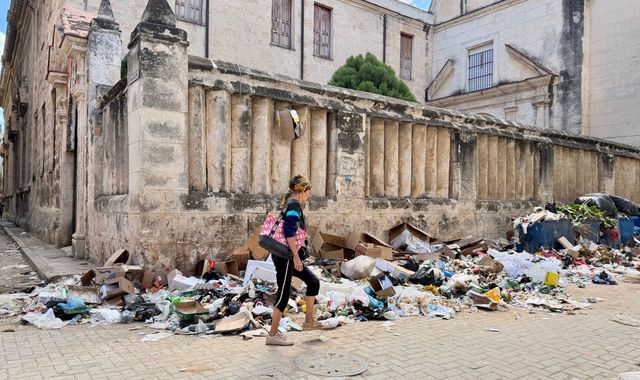
Trump then endorsed the newly compliant Delcy Rodriguez to run Venezuela, took control of the country's oil business, and crucially, set up an oil blockade of Cuba. In doing so, he indicated that Cuba was now on his list of countries he intends to "deal with". Iran, already on that list, has recently been at the centre of the president's attention, but all the indicators are that Cuba is most certainly "next". We know this because Trump has said so. In reality, the oil blockade is already bringing Cuba to its knees. Venezuela provided cheap fuel to Cuba, and it was augmented by supplies from Mexico. These vital lifelines have both stopped on Trump's orders, though Mexico maintains it was a "sovereign decision". A single Russian oil tanker has reached Cuba this year, but that is for now, all the oil it has received. Cuba has failed to diversify its power supplies - there's little solar power, little wind power, and very little gas - making it particularly reliant on oil to the point that now it can barely function. I've recently been inside Cuba, and the effects of the blockade are devastating and immediately obvious. This oil blockade is an economic war every bit as destructive as bombs and bullets. There are continuous power blackouts across the country, and now also in the capital Havana, which was traditionally spared this type of treatment. Government food stores and bakeries selling heavily subsidised household essentials are now regularly closed or virtually empty. Many Cubans relied on these stores to buy food to survive - and not having this vital supply means there is a growing crisis, with people going hungry. Petrol stations are largely closed and empty, pharmacies are bare, and people are queuing to get money from cash machines that are often drained and always come with a strict withdrawal limit. Read more:Cuba's president has a message for TrumpCuba leaders' days 'are numbered', warns senator The tourism industry that once brought billions of dollars of hard currency to Cuba has almost come to a standstill. Trump's threats, the blackouts, and a lack of aviation fuel have scared tourists away, particularly in Havana. The traditional safety nets in Cuba, like its healthcare system, have broken. Hospitals are running on generators with very little supplies. Charities are doing their best to pick up the slack with food handouts for the elderly and the homeless - they say they're now also handing out food to children and trying to help with education. But they're struggling to find the resources, struggling to keep up with the demand and the need. Rubbish is piled up on the streets all over the capital, and that's mainly because there's no fuel for the bin trucks to collect it. I watched as people picked through the rotting food and vegetables in the rubbish, looking for something to eat - sometimes eating it where they stood. In alleyways nearby we filmed as people slept rough. Countless people I spoke to told me that even though Cuba is a poor country, seeing this type of thing was not common here in the past - this was not how it used to be. But these types of images have now become a constant visual reminder of how every facet of life in this Caribbean country is being affected by the blockade and Donald Trump's threats. The once magnificent buildings that marked Havana out as a special place in the region are crumbling, even completely falling apart in places. People still live in these monuments to Cuba's past; they're clinging to a way of life that is disappearing. A charity director I spoke to, who is also a tour guide mainly for Italian visitors, explained it to me this way: when her clients see Havana's disintegrating buildings, they ask her when the war was that brought this destruction about - there hasn't been a war, she has to explain. Observers, neutral or otherwise, agree that people can't go on living like this and that Cuba needs help. So far, Trump and his advisers have shown little regard for the fate of the Cuban population. His promise that Cuba is next means nothing to the average person, because they don't know what next means, and here many doubt that the president or anyone in the White House knows what next means either, or if there is even a plan for a future in Cuba.
No Writer
Apr 17
Met Police officer guilty of series of rapes and sexual assaults
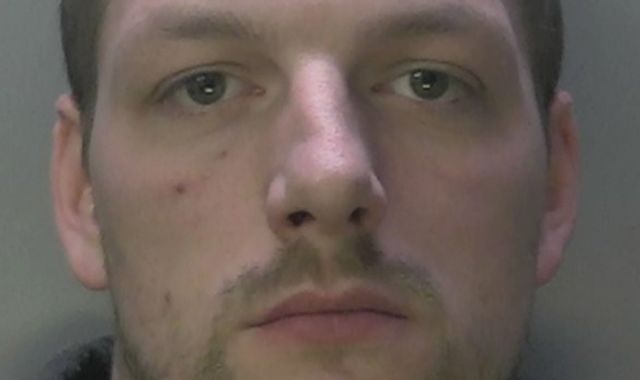
Dion Arnold was also an Army Reserve medic when he met some of the women he assaulted through online dating apps, prosecutors said. One woman reported Arnold to the police in March 2025, leading to his arrest. An examination of his phone revealed a list of women's names and, when contacted, three came forward with allegations of rape or sexual assault, according to the Crown Prosecution Service (CPS). His victims told Guildford Crown Court they felt pressured by Arnold and had to submit to him, and that he ignored them when they repeatedly asked him to stop, the CPS said. He has now been convicted of four charges of rape, two of assault by penetration, and two of sexual assault. It is understood he did not meet any of the women in his role as a police officer. Claire Gallagher, senior crown prosecutor from the CPS, said: "These women believed that, as a police officer, they could trust Arnold and would be safe with him. He abused that trust in the most appalling way. "As a police officer working with victims of domestic abuse, Arnold knew exactly what the law of consent means. These women asked Arnold to stop and he knew that, even referring to it in messages between them." Read more from Sky News:Cuba is on its knees - and 'next' on Trump's listJudge halts construction of Trump's White House ballroom She continued: "The impact that Arnold had on these women cannot be underestimated. "One told him in messages that he had 'destroyed and broken her', while another described feeling 'powerless' and that she had no option but to submit. In law, that is not consent. "Arnold deliberately targeted women that he thought would not stop him and would never have the courage to report him. They have proved him wrong and have seen him brought to justice for his appalling crimes." Arnold will be sentenced at Guildford Crown Court on 22 June. The Met confirmed Arnold remains suspended from duty and will face a misconduct hearing following his conviction. Chief Superintendent Dan Knowles, who leads policing in the South West, where Arnold worked, said: "We are sickened that PC Arnold carried out these horrendous crimes while serving as a police officer in the Met, something he deliberately told the victim-survivors from the outset so that they would have more trust in him. "We do not underestimate the impact that cases like this have on the confidence that women and girls have in our organisation but would encourage anyone in a similar situation to report allegations."
No Writer
Apr 17
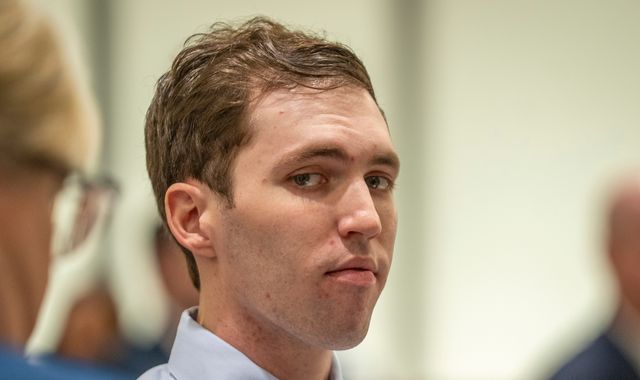
Charlie Kirk murder accused Tyler Robinson asks for trial camera ban
Tyler Robinson, 23, from Utah, is charged with aggravated murder in relation to the shooting of Mr Kirk at the Utah Valley University campus in Orem. Robinson is due in court on Friday and his attorneys are pressing their claims that biased coverage is tainting potential jurors. "The predominant purpose being served by the live stream coverage has not been the educational reporting of the court proceedings, but rather advertising profit, sensationalism, political agendas, and, most prominently, the vilification of Mr Robinson," his team wrote. Among the numerous examples they cite is a New York Post story about his first court appearance on 11 December, when a conversation he had with his attorneys was scrutinised using "lip reading analysis". This analysis was used to support the claim that Robinson said: "I think about the shooting daily". His lawyers say the story suggests Robinson confessed to Mr Kirk's killing. Prosecutors plan to seek the death penalty for Robinson if he is convicted over the 10 September shooting of the conservative activist. Video of the incident showed Mr Kirk, 31, a staunch ally of Donald Trump, reaching up with his right hand after a gunshot was heard as blood came out from the left side of his neck. He died shortly after. Read more:Trump honours 'great friend' Charlie Kirk during state of the unionKirk murder 'consequence of terrifying gun culture' - Rushdie Robinson has not yet entered a plea. The prosecution, the media, and Mr Kirk's widow, Erika, want the court to allow cameras, arguing that transparency is the best way to guard against misinformation and conspiracy theories. But the media has already tested the patience of Judge Tony Graf with its livestreaming from court. During the December hearing, he briefly stopped the livestream and ordered the camera relocated after it showed the defendant's shackles, violating a courtroom decorum order. A January hearing was interrupted too, when Robinson's attorneys argued that close-up shots of him livestreamed by a local television station could again lead to claims based on lip reading. The judge ordered the camera operator not to film Robinson for the remainder of the hearing after this further violation of his decorum order. But he has so far focused on whether rules are being followed inside his court, not what the media are saying outside of it. Different states have different policies on cameras in court and many, including Utah, give judges discretion over whether to allow them, though they are generally prohibited in federal courts. "There's Supreme Court precedent that says courts generally need to be open to the public, but that's not an absolute right," said University of Utah law professor Teneille Brown. "Even if they allow public access, that does not equal a right to broadcast or record."
No Writer
Apr 17
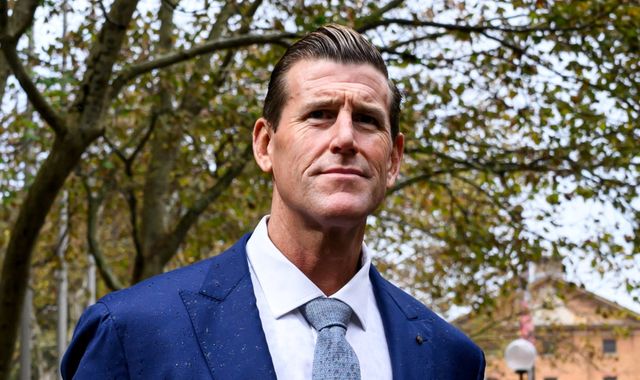
Medal-winning veteran Ben Roberts-Smith released on bail in Sydney after Afghan war crimes charges
Last week, police arrested Ben Roberts-Smith, 47, over the alleged murder of five unarmed Afghan civilians between 2009 and 2012. The former Special Air Service Regiment corporal, who was awarded the Victoria Cross and the Medal of Gallantry for his service in Afghanistan, has consistently denied any wrongdoing. At a court in Sydney on Friday, Judge Greg Grogin granted Roberts-Smith bail and ruled there were exceptional circumstances to justify his release from custody. Roberts-Smith was charged on 7 April with five counts of war crime murder, which is defined as intentionally killing someone who is not an active part of hostilities during an armed conflict. Each charge carries a maximum term of life in jail and he has yet to enter pleas. Prosecutors had opposed bail and argued there was a risk that, if Roberts-Smith was released from prison in Sydney, he would flee Australia or interfere with witnesses and evidence. Roberts-Smith, who appeared via video link at the hearing, was required to provide a bail surety of $250,000 (£132,525) and refrain from contacting any prosecution witnesses, in addition to travel restrictions. Around 40,000 Australian military personnel served in Afghanistan between 2001 and 2021, of whom 41 were killed. Roberts-Smith is accused of personally shooting dead two victims and allegedly ordering subordinates to shoot three other victims. Read more from Sky News:Meghan 'most trolled' in the worldPakistani air strikes hit KabulAfghan women 'forgotten' under Taliban During a defamation case in 2023, Roberts-Smith said he had never killed an unarmed Afghan and denied ever committing a war crime. He claimed he was the victim of spiteful fellow soldiers' lies and of others' envy of his medals. During that case, and his subsequent failed appeal, a judge rejected his claims that newspaper articles defamed him and found war crimes allegations were mostly proven on a balance of probabilities. In Australia, a criminal trial requires a higher standard of proof, defined as beyond a reasonable doubt.
No Writer
Apr 17
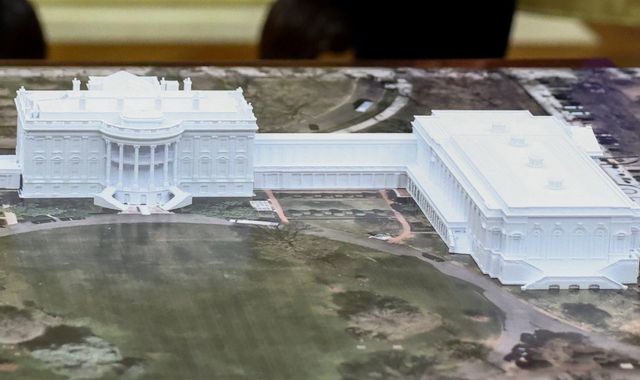
Donald Trump's controversial White House ballroom project halted by judge
All above-ground work on the US president's $400m (£296m) pet project must pause after district judge Richard Leon's ruling on Thursday. But below-ground work can continue on a bunker and other "national security facilities" at the site, where the now-demolished East Wing of the White House once stood. It means builders are free to proceed with constructing any excavations, bunkers, military installations, and medical facilities below the planned ballroom. Mr Trump has since taken to social media to express his dismay at the decision of the "Trump hating" judge. He said Judge Leon "has gone out of his way to undermine National Security, and to make sure that this Great Gift to America gets delayed, or doesn't get built". Government lawyers argued that the project includes critical security features to guard against a range of possible threats, including drones, ballistic missiles, and biohazards. Read more from Sky News:Israel accused of 'violating' ceasefire deal with LebanonTrump's oil blockade is bringing Cuba to its knees But the judge disagreed, writing: "Defendants argue that the entire ballroom construction project, from tip to tail, falls within the safety-and-security exception and therefore may proceed unabated. "That is neither a reasonable nor a correct reading of my Order!" The Trump administration said it will take the decision to the US Court of Appeals for the District of Columbia Circuit to review. The National Trust for Historic Preservation, which sued to challenge the project in December, said in a statement that it was pleased with the court's ruling. If it is completed, Mr Trump's plan to build a 90,000sq ft ballroom for up to 999 people will mark the biggest structural change to the White House in more than 70 years. The judge's ruling marks the latest development in the legal fight over the project. Earlier this month Judge Leon barred construction of the ballroom without congressional approval. But days later the plans were approved by the National Capital Planning Commission, the agency responsible for approving construction on federal property in Washington DC. Mr Trump says the project is funded by private donations, although public money is paying for the bunker construction and security upgrades.