



Top Five Times TV Shows Got Too Clever for Their Own Good
- jamiecrow2
- Jun 12
- 3 min read

There's a fine line between smart television and television that practically requires a whiteboard, three highlighters and a postgraduate degree to follow.
The best shows challenge viewers. The worst disappear so far up their own cleverness that they forget to tell a coherent story.
Here are five times TV may have overcomplicated things just a little:
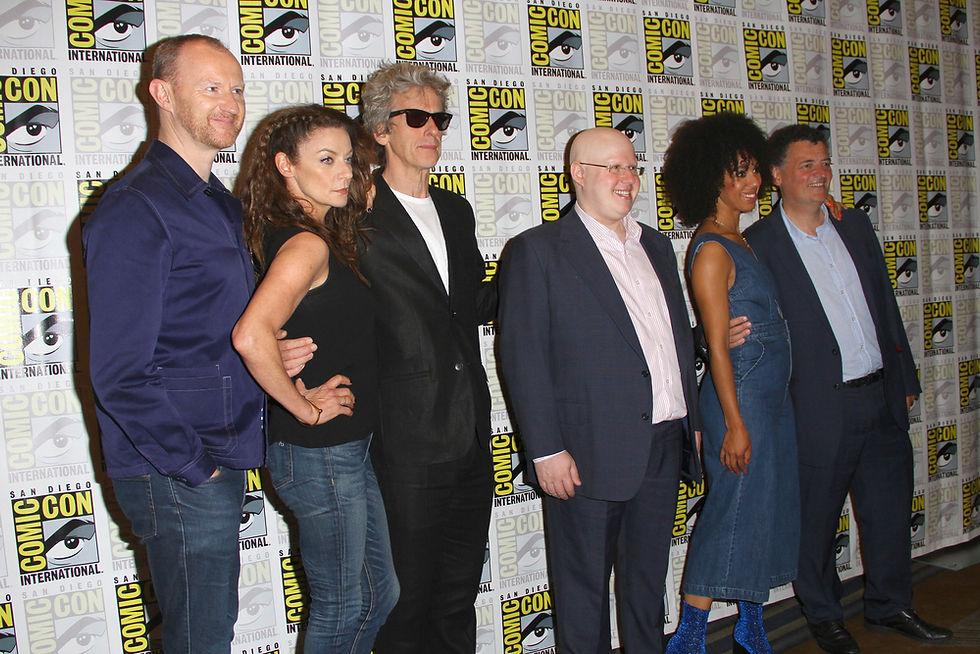
5. Sherlock — Turning Every Episode Into a Magic Trick
The early appeal of Sherlock was simple: brilliant mysteries, sharp dialogue and two fantastic lead characters.
But as the series progressed, the show became increasingly obsessed with outsmarting its audience. Every reveal needed another reveal. Every twist needed a hidden twist beneath it.
The best example remains Sherlock's apparent death and resurrection. Fans spent years crafting elaborate theories, only for the show to dodge a definitive explanation and poke fun at the people trying to solve it.
Why it got too clever:
The writers seemed more interested in proving how clever they were than delivering satisfying answers.
4. Doctor Who — The Silence, River Song and Several Headaches
Doctor Who has always played with time travel.
That's part of the fun.
But during the height of the River Song and Silence storylines, things became extraordinarily tangled. Characters met each other in the wrong order. Future versions interacted with past versions. Major events happened because they had already happened.
Fans loved piecing together the puzzle, but even devoted viewers occasionally struggled to explain the plot to someone else.
Why it got too clever:
When a show about time travel requires a timeline chart, things may have gone slightly too far.
3. Westworld — Season Two's Determination to Confuse Everyone
Season one was a masterpiece.
The hidden timeline twist rewarded attentive viewers and completely recontextualised the story.
Unfortunately, the show's response seemed to be: "Let's make the next season even harder."
Characters existed in multiple timelines, simulated realities blurred into real ones, memories became unreliable, and viewers often couldn't tell where or when scenes were happening.
At one point, simply understanding the chronology felt like a full-time job.
Why it got too clever:
The show began treating confusion as a storytelling technique rather than a side effect.
2. Lost — The Mystery Box That Never Stopped Growing
Few shows have generated more fan theories than Lost.
Every answer seemed to produce five new questions.
A mysterious hatch led to mysterious numbers. Those led to mysterious organisations. Those led to time travel. Then came ancient guardians, smoke monsters and increasingly complicated mythology.
The show remained compelling, but by the end many viewers felt the writers had become trapped inside their own maze.
Why it got too clever:
It spent years building mysteries that no finale could realistically satisfy.
1. The Blacklist — Stretching One Secret Beyond Breaking Point
For years, the central mystery was irresistible:
Who exactly is Raymond Reddington?
Every season promised answers. Every answer raised fresh questions. Identities were questioned. Histories were rewritten. Relationships were redefined.
The mystery became so layered that even longtime fans struggled to keep track of what had been confirmed, contradicted or quietly abandoned.
What started as a compelling question gradually became an endless cycle of reveals and reversals.
Why it got too clever:
The show became so focused on preserving the mystery that it forgot the mystery eventually needed a satisfying solution.


Drive Mad looks simple at first, but some stages require surprisingly careful control. It's one of those games where patience pays off.